The Day I Said No to AI in My Art . Why the Struggle Is the Point.
The real story of why AI has no place in this artist's creative process — how outsourcing ideas to a machine short-circuits the brain connections that build real skill, and why every digital and abstract piece here is decided, revised, and finished by hand.
ART EXHIBITIONSART JOURNEYCREATIVE PROCESS
Bugatti Art
7/21/20265 min read

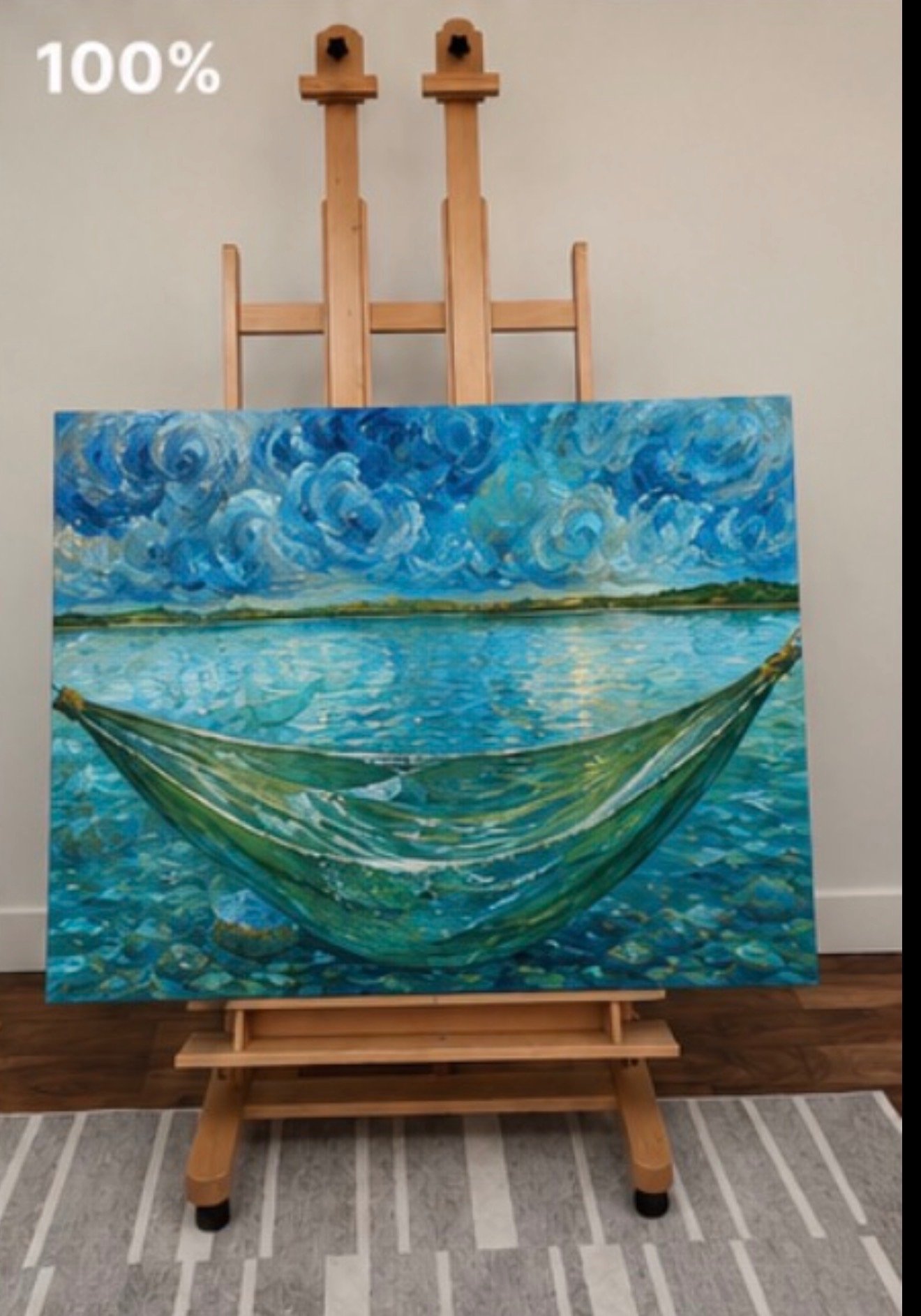
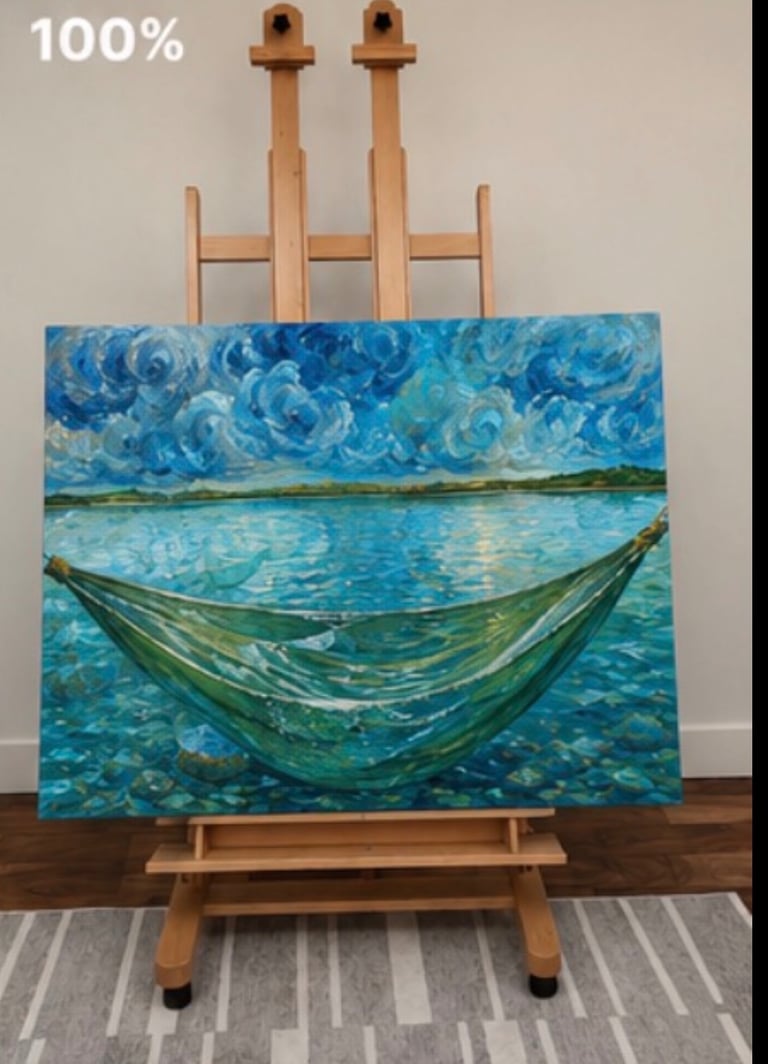
The Night I Let the Machine Into My Studio and Called It Art
"I didn't announce it. I didn't post a big reveal. I just sat there at 1am with a blank canvas file open, staring at a cursor, wondering if what I was about to make even counted. This is the real story of how digital art, AI, and abstraction found their way onto my walls — and why I stopped being afraid of the word 'digital' in front of 'art.'"
The Question I Couldn't Shake
For years, "real art" meant paint on canvas. Brushes. Turpentine on my hands. Something I could point to and say, I made every mark on this myself.
Then I painted Pike Place Market. Then the Aquarium's octopus tank, glowing blue-green through the dome glass. And somewhere in between those two pieces, I started asking a question that scared me a little: what happens when the canvas is a screen, and some of the marks aren't made by my hand alone?
That question became abstract art. It became AI art. It became a body of work I almost didn't admit was mine.
Abstract Art: Permission to Stop Explaining
Painting the Market taught me control — every flower stall, every fish mid-air, had to look like that flower stall, that fish. Abstract work is the opposite. It's permission to stop explaining and just feel.
My abstract pieces started as color studies pulled straight from memory: the teal of the Aquarium tanks, the burnt orange of Market awnings at golden hour, the gray Seattle sky that somehow makes every other color louder. No fish, no flowers, no recognizable shape — just the emotional residue of standing in those places.
That's the secret nobody tells you about abstract wall art: it's not about having nothing to say. It's about saying it without the safety net of a subject.
Digital Art: The Studio That Fits in a Laptop
Digital art didn't replace my brushes. It gave me a second studio — one that travels, one that lets me undo a mistake instead of living with it for a week.
Working digitally meant I could take the bones of a Seattle scene — the shape of the Market clock, the curve of a jellyfish tank — and push them somewhere a physical canvas never could. Layered textures. Impossible color combinations. Compositions I'd sketch a dozen times digitally before ever touching pigment.
It didn't feel like cheating. It felt like sketching at the speed of thought.
Why I Say No to AI in My Art Process
Somewhere in the middle of exploring digital tools, I tried letting AI generate ideas for me. And I stopped almost as fast as I started.
Here's why: creativity isn't just an output. It's a process happening inside the artist — a struggle, a series of small decisions, a hand and a brain arguing with each other until something true comes out. When I let AI generate the ideas, that struggle disappeared. The options showed up finished, pre-decided, with none of the friction that actually builds skill.
That friction matters more than people think. Every time I wrestle with a composition myself — try it, fail, try again — I'm building a new connection between what I see and what I can make. That's not poetic language, that's how creative skill actually develops: through repetition, struggle, and problem-solving that happens inside your own head, not inside a model. Hand AI the "creative" part and you skip that process entirely. You get a result, but you don't get the growth. And over time, you start relying on the machine to do the imagining for you, instead of training your own eye and instinct to do it.
So the digital and abstract work you see here is mine, start to finish — sketched, decided, revised, and finished by hand and by my own judgment, using digital tools the same way I'd use a brush or a palette knife: as a tool, not a collaborator. No AI-generated compositions, no AI-generated color palettes, no outsourced "creativity." Just a slower, harder, more human process — the only kind that actually builds an artist instead of just producing an image.
Why This All Ends Up on a Living Room Wall
Here's the thing about digital and abstract art that people don't expect: it doesn't feel cold once it's printed, framed, and hanging above a couch. A bold abstract piece in teal and orange does something a landscape photo can't — it doesn't tell your guests exactly what to see. It lets the room breathe. It becomes a color anchor instead of a scene to analyze.
That's what I want when someone brings one of these pieces into their living room — not a copy of Pike Place Market or the Aquarium, but the feeling of them. The energy of the Market's color. The stillness of water and light. Abstracted, digitized, always hand-decided by an actual person who stood in those places and couldn't stop thinking about them.
The Part I'm Still Figuring Out
I won't pretend I've resolved every question digital art raises for me. But I have resolved the AI question, at least for my own process — the struggle is the point, and I'm not willing to trade it away for convenience. The paint-on-canvas work and the digital, abstract work come from the same place — a compulsion to turn what I saw in this city into something you can hang on a wall and feel, every day, without needing to explain it to anyone.
Curious about the original digital and abstract wall art pieces from this journey — including work inspired by Pike Place Market and the Seattle Aquarium? New pieces are added as the studio (and the questions) keep evolving.
FAQ: Digital, Abstract & Original Wall Art
Is digital art considered "real" original art? Yes — digital art is original art as long as it's created and decided by the artist, not generated. The tool changes (screen instead of canvas), but the creative process — composition, color choices, revision — stays entirely with the artist.
Why avoid AI-generated art in a creative process? Relying on AI to generate compositions or color choices skips the trial-and-error that actually builds artistic skill. Creativity develops through repeated hands-on problem-solving; outsourcing that step trades long-term growth for short-term convenience.
What's the difference between abstract art and AI art? Abstract art is a style — non-representational shapes, colors, and forms created entirely through an artist's own decisions. AI art refers to imagery generated wholly or partly by an algorithm. A piece can be abstract without being AI-generated, and that distinction matters for anyone buying original, hand-made work.
Is abstract wall art a good fit for a living room? Abstract wall art works especially well in living rooms because it sets a mood and color palette without dictating a specific scene, making it easier to pair with different furniture, lighting, and decor styles.
How do I know if a piece of wall art is truly original and hand-created? Ask the artist directly about their process — original, hand-created work will have a clear, describable process (sketching, composition decisions, physical or digital mark-making by the artist) rather than a one-line AI prompt.
What should I look for when buying original art for my home? Look for a documented creative process, the artist's own narrative or story behind the piece, consistent style across their body of work, and transparency about how the piece was made.
Bugatti Art
Explore our sleek website template for seamless navigation.
Contact
Newsletter
Val@bugattiart.com
425-448-8459
© 2026. All rights reserved.